
For years, wagering on esports results was treated as the ultimate industry taboo. Today, it is a multi-billion-dollar market. As global betting volumes on virtual competitions triple to rival traditional sports, the lines between gaming and wagering are blurring. And beyond the gambling boom, a broader behavioral shift is happening: players are now ready to put their money where their skills are.
Breaking the Taboo: Riot Games Opens the Gates to the Esports Betting Market
Historically, the esports industry held a rigid line against wagering. But the market dynamic has become too massive to ignore. Over the past few years, global esports betting volume has tripled, proving it can now go toe-to-toe with major traditional sports.

Riot Games recently updated its rules to allow professional esports teams to sign sponsorship deals with traditional betting operators under strict conditions.
And tomorrow, the publisher might go even further. A recent Bloomberg report revealed that the makers of VALORANT and League of Legends are now exploring direct sponsorships with prediction markets like Polymarket andKalshi.
This policy change means one thing: esports giants are acknowledging reality. They view esports betting as an inevitable and legitimate demand from a growing segment of their adult audience.
The Polymarket Effect: When Esports Predictions Overtake Traditional Sports
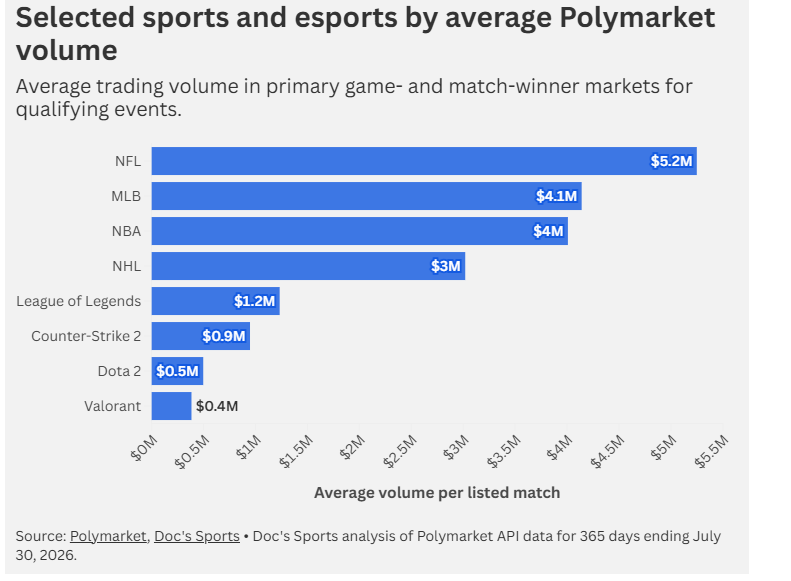
Behind this growth lies the rise of Web3 and crypto-native infrastructure. The decentralized prediction platform Polymarket, alongside Web3 betting protocols like Azuro and decentralized sportsbooks like Dexsport, is a prime example. While traditional sports still lead the overall charts, on-chain data reveals that esports is now drawing major-league-level betting action.
This crossover proves a crucial point. Part of the market is now mature enough to link gaming and real-money betting at scale. More importantly, it shows that Web3 tech can achieve mainstream adoption. When the tech simply works, the mainstream audience of platforms like Polymarket doesn’t care about the underlying blockchain; they only care about the seamless experience and the money on the line.
The Sbarter vision: Empowering Gamers to Bet on Themselves
While this betting boom heavily validates Gen Z’s appetite for wagering in gaming, with Gen Z now driving 44% of all esports betting volume, Sbarter is playing in a radically different lane. On our platform, the user isn’t a passive spectator hoping a pro team clutches the win; they are using their own skills to dominate the challenge.
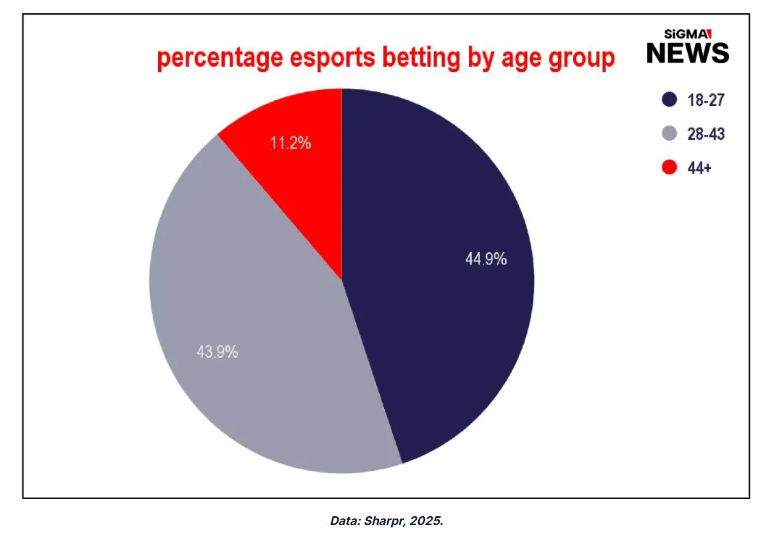
We leave absolutely no room for games of chance so the explosion of esports betting isn’t a playbook for us to copy. Instead, we treat this boom as the ultimate market signal: it proves that today’s generation of players wants to attach real financial value to virtual competition. If millions of people are willing to put money on someone else’s talent, there is undeniably a massive, untapped market for players to transform their matches into shared competitive events and monetize their own skills.